Blog Archives
Michael Seth Starr is a guest on WFDU Radio
Author of the book Ringo: With a Little Help, Michael Seth Starr, spoke with Ghosty host of The Vintage Rock & Pop Shop. They spoke about the book, why he chose to focus on Ringo and gave some background on the Beatles. Listen to the podcast below to hear the entire interview and leave your thoughts in the comment section below!
>>Listen<<
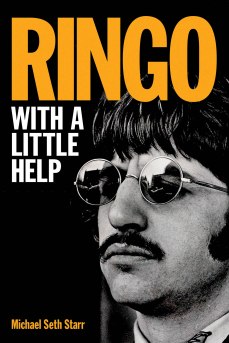 Ringo: With a Little Help is the first in-depth biography of Beatles drummer Ringo Starr, who kept the beat for an entire generation and who remains a rock icon over fifty years since the Beatles took the world by storm. With a Little Help traces the entire arc of Ringo’s remarkable life and career, from his sickly childhood to his life as The World’s Most Famous drummer to his triumphs, addictions, and emotional battles following the breakup of the Beatles as he comes to terms with his legacy.
Born in 1940 as Richard Starkey in the Dingle, one of Liverpool’s most gritty, rough-and-tumble neighborhoods, he rose from a hardscrabble childhood – marked by serious illnesses, long hospital stays, and little schooling – to emerge, against all odds, as a locally renowned drummer. Taking the stage name Ringo Starr, his big break with the Beatles rocketed him to the pinnacle of worldwide acclaim in a remarkably short time. He was the last member of the Beatles to join the group but also the most vulnerable, and his post-Beatles career was marked by chart-topping successes, a jet-setting life of excess and alcohol abuse, and, ultimately, his rebirth as one of rock’s revered elder statesman.
Black and Blue: The Redd Foxx Story
Black and Blue: The Redd Foxx Story, written by Michael Seth Starr this book tells the story of the veteran comedian and “overnight sensation” at the age of 49 whose early life was defined by adversity. Featured below is an interview with Michael Seth Starr on St. Louis Public Radio, where he talk about the book and the life of a true comic genius — Jon Sanford a.k.a Redd Foxx.
>>LISTEN<<
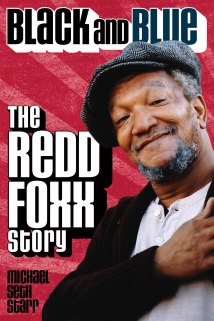 Black and Blue: The Redd Foxx Story tells the remarkable story of Foxx, a veteran comedian and “overnight sensation” at the age of 49 whose early life was defined by adversity – and his post-Sanford and Son years by a blur of women, cocaine, endless lawsuits, financial chaos, and a losing battle with the IRS.
Foxx’s frank, trailblazing style as the “King of the Party Records” opened the door for a generation of African-American comedians including Dick Gregory, Bill Cosby, Richard Pryor, Eddie Murphy, and Chris Rock.
Foxx took the country by storm in January 1972 as crotchety, bow-legged Watts junk dealer Fred Sanford in Sanford and Son, one of the most beloved sitcoms in television history. Fred’s histrionic “heart attacks” (“It’s the big one, Elizabeth! I’m comin’ to join ya, honey!”) and catchphrases (“You big dummy!”) turned Fred Sanford into a cultural icon and Redd Foxx into a millionaire. Sanford and Son took Foxx to the pinnacle of television success – but would also prove to be his downfall.
Interviews with friends, confidantes, and colleagues provide a unique insight into this generous, brash, vulnerable performer – a man who Norman Lear described as “inherently, innately funny in every part of his being.”
The Beatle Years host, Bob Malik, speaks with Michael Seth Starr
Michael Seth Starr, author of Ringo: With A Little Help, visited Bob Malik’s show, The Beatle Years, to speak about his book and what made Ringo Starr so popular. From Ringo’s life as a young kid to his life with The Beatles, Michael Seth Starr covers a little bit of everything to give listeners a preview of what the book is like. Click below to hear what he had to say!
>>LISTEN HERE<<
Ringo: With a Little Help is the first in-depth biography of Beatles drummer Ringo Starr, who kept the beat for an entire generation and who remains a rock icon over fifty years since the Beatles took the world by storm. With a Little Help traces the entire arc of Ringo’s remarkable life and career, from his sickly childhood to his life as The World’s Most Famous drummer to his triumphs, addictions, and emotional battles following the breakup of the Beatles as he comes to terms with his legacy.
Born in 1940 as Richard Starkey in the Dingle, one of Liverpool’s most gritty, rough-and-tumble neighborhoods, he rose from a hardscrabble childhood – marked by serious illnesses, long hospital stays, and little schooling – to emerge, against all odds, as a locally renowned drummer. Taking the stage name Ringo Starr, his big break with the Beatles rocketed him to the pinnacle of worldwide acclaim in a remarkably short time. He was the last member of the Beatles to join the group but also the most vulnerable, and his post-Beatles career was marked by chart-topping successes, a jet-setting life of excess and alcohol abuse, and, ultimately, his rebirth as one of rock’s revered elder statesman.
Happy Birthday, Ringo!
 Ringo Starr, the most famous drummer there ever was, turns 75 today! Backbeat Books is marking the day with the publication of Ringo: With a Little Help by Michael Seth Starr (no relation!). Here’s a link to Michael’s recent visit to Good Morning America, and 15 fun facts you may not have known about Ringo!
2015: The Year of the Starr
Happy New Year, everyone!
 Ringo Starr has recently announced some exciting news for this new year, including a new album and tour! The former Beatle said the LP has been recorded and mixed and also teased of concert dates with his All Starr Band in February and March of this year.
In addition to a new album and tour, Backbeat Books is releasing a book on the recent Rock and Roll Hall of Fame inductee entitled Ringo: With a Little Help, written by Michael Seth Starr (no relation to Ringo). The book is set to be released on Ringo’s 75th birthday, July 7!
Ringo: With a Little Help is the first in-depth biography of Beatles  drummer Ringo Starr, who kept the beat for an entire generation and who remains a rock icon over fifty years since the Beatles took the world by storm. With a Little Help traces the entire arc of Ringo’s remarkable life and career, from his sickly childhood to his life as The World’s Most Famous drummer to his triumphs, addictions, and emotional battles following the breakup of the Beatles as he comes to terms with his legacy.
Redd Foxx’s Birthday
Known for his frank, tell-it-like-it-is form of comedy, the star of hit show “Sanford and Son” was an inspiration to comedians and minorities alike. Below is an excerpt from Black and Blue: The Redd Foxx Story, by Michael Seth Starr, in honor of his birthday.
Laff of the Party, Volume 1 is a slapdash collection of bits and pieces of Redd’s act, backed by raucous laughter (and the occasional shouted comment) from his Oasis Club audience, which sometimes sounds like a packed house and other times like only a handful of cackling customers. The record, about thirty-seven minutes long, is short on production values – about what you’d expect to hear, aurally, from a reel-to-reel tape recorder in a small nightclub. It’s divided into eight tracks, four on each side. The tracks on Side One are “Backward Conscious,” “The Sneezes,” “Song Plugging,” and “The New Soap”; Side Two has “The Honeymooners,” “The Politician,” “The Jackasses,” and “The Race Track.”
Judging Laff of the Party, Volume 1 by the standards of the times, it comes across as risqué, but the beauty of Redd Foxx’s humor lies in his clever wordplay. There is no profanity on Laff of the Party, Volume 1, but there are plenty of double entendres sprinkled throughout Redd’s four-to-five-minute-long monologues. Sometimes the wordplay catches Redd’s audience off-guard, and their laughter is a beat behind as they struggle to keep up with his rapid-fire delivery, to digest the verbal volley he’s just lobbed at them. At other times, Redd’s Oasis Club audience is right there with him, almost giddy with anticipation as he winds up and gets ready to lob his next zinger.
The record begins (somewhat abruptly, without any introduction) with “Backward Conscious,” in which Redd riffs on how some words spelled backwards have other meanings. “Did you know ‘motel’ spelled backwards was ‘letom’?” On “The Sneezes,” constructed loosely around different types of sneezes (“The confessional sneeze: ‘Ah Chew!’”), Redd segues into cigarette smoking with a smutty twist: “Do you know that out of four hundred, forty-six doctors that switched to Camels, only two of ‘em went back to women?”
“Song Plugging” is a takeoff on the old show-biz practice of selling, or “plugging,” sheet music or different acts to stores and record labels. But there’s a Foxx-ian twist when Redd talks about all his success “plugging” in New York City: “Pieces like Laura, Marie, Margie. Those were good pieces. I plugged all those pieces, I plugged ‘em all. I plugged that Old Gray Mare, but she ain’t what she used to be.”
In one of the record’s most memorable tracks, “The New Soap,” Redd talks to housewives in the audience about a new cleaning product called “Fugg”: “Suppose your husband works on a dirty job, in a coal mine, on a truck, in a garage…when he comes home all dirty and nasty, when he opens the door and walks into the house, tell him to go Fugg himself.”
 Black and Blue: The Redd Foxx Story tells the remarkable story of Foxx, a veteran comedian and “overnight sensation” at the age of 49 whose early life was defined by adversity – and his post-Sanford and Son years by a blur of women, cocaine, endless lawsuits, financial chaos, and a losing battle with the IRS.
Foxx’s frank, trailblazing style as the “King of the Party Records” opened the door for a generation of African-American comedians including Dick Gregory, Bill Cosby, Richard Pryor, Eddie Murphy, and Chris Rock.
Foxx took the country by storm in January 1972 as crotchety, bow-legged Watts junk dealer Fred Sanford in Sanford and Son, one of the most beloved sitcoms in television history. Fred’s histrionic “heart attacks” (“It’s the big one, Elizabeth! I’m comin’ to join ya, honey!”) and catchphrases (“You big dummy!”) turned Fred Sanford into a cultural icon and Redd Foxx into a millionaire. Sanford and Son took Foxx to the pinnacle of television success – but would also prove to be his downfall.
Interviews with friends, confidantes, and colleagues provide a unique insight into this generous, brash, vulnerable performer – a man who Norman Lear described as “inherently, innately funny in every part of his being.”
“I’ll Be Back” : The Story of Redd Foxx
Today marks the birth date of Redd Foxx, an “overnight sensation” in the comedy world whose early life was defined by adversity and later years by a blur of women, cocaine, endless lawsuits, and financial chaos. Read on for an exclusive excerpt from Black and Blue: The Redd Foxx Story, brought to you by Michael Seth Starr and Applause Theatre & Cinema books.
Dawn broke hot and hazy that fall Friday in 1991. It wasn’t the typical October day in Southern California, where the blazing summer sun usually concedes to cooler fall temperatures. This was a different kind of day. The weather had turned harsh during the past week as the city of Los Angeles, along with the rest of the state, baked in the grip of an unprecedented heat wave. Temperatures the previous day had reached 107 degrees in downtown Los Angeles—a new record. And it wasn’t much better today.Inside the cavernous, air-conditioned Stage 31 on the Paramount lot in Hollywood, the cast and crew of the new CBS sitcom The Royal Family were preparing to rehearse a scene for that week’s show, which would be taped the following night before a live audience. The mood on the set was business-like but friendly, with a touch of jocularity. Everyone was feeling good, and why not? The Royal Family had premiered three weeks before to mostly positive reviews and solid ratings, pleasing the suits at CBS—a vibe that trickled down to the cast and crew. The show had legs.
While assistant directors scurried around, sound men positioned their boom mikes, and episode director Shelley Jensen barked last-minute blocking instructions to the cast and crew, series star Redd Foxx was backstage, being interviewed for an episode of Lifestyles of the Rich and Famous. The irony wasn’t lost on anyone, since Redd, while certainly still famous, was no longer rich, and hadn’t been for some time. His profligate spending, failed business ventures, willingness to open his wallet to anyone who asked for a handout—and the long arm of the Internal Revenue Service—had seen to that. But Lifestyles host and executive producer Robin Leach—chronicler of the jet-setting crowd with his plummy “Champagne wishes and caviar dreams!” mantra— knew that The Royal Family marked an important baby step in Redd Foxx’s comeback from the abyss of financial and professional ruin. It made for a good story.
Redd knew how much The Royal Family meant to him now. He didn’t need any more reminders of how far his star had fallen, or how he was going to repay the millions he still owed to the IRS. It was somewhere in the neighborhood of $3 million, but who the hell really knew? Maybe it was more, maybe it was less. It didn’t really matter anymore. The bastards had taken pretty much everything he owned—even ripped the gold watch Elvis Presley had given him right off his wrist—and now they were garnishing his Royal Family salary. Was there no end to the humiliation? Redd tried to laugh it off—passing a hat around at his live stage shows in Las Vegas, asking for help to pay his bills—but it hurt him deeply. Deep down he knew he had only himself to blame.
And then, with the Lifestyles of the Rich and Famous cameras rolling, as Redd was answering a question about his new cast mates, an unseen
Royal Family production assistant suddenly interrupted him midsentence. He was told he was needed on the set to rehearse a scene in which his sitcom character, Al Royal, would pass through nonchalantly in the background, unnoticed by his wife, who was played by Della Reese. It was a job that could have been handled by anyone with a pulse. Did they really need Redd now, in the middle of an important interview? Couldn’t it wait?
Remembering the incident almost twenty years later, Della Reese was still angry about that interruption. “It was not required at all,” she said. “Redd was very polite. He felt embarrassed that this man, in the first place, spoke to him in front of these strangers [from Lifestyles of the Rich and Famous].”
But Redd also knew there was nothing he could do about it. Maybe back in his Sanford and Son heyday, but not now. There was too much water under the bridge. He knew he was on a short leash, knew that The Royal Family producers and the network watchdogs on the set held the upper hand now. They were all-too-aware of Redd’s reputation for making trouble behind the scenes. He needed them now more than they needed him. It was a simple Hollywood equation. Do what we tell you, or take a hike. We’ll find someone else. It doesn’t matter that you’re Redd Foxx, who once played Fred Sanford. It doesn’t matter that you’re Redd Foxx, who was once the highest-paid star on television. It doesn’t matter that you’re Redd Foxx who, once upon a time, single-handedly brought a network to its knees. That was twenty years ago. A lifetime in this business. This is now. What have you done for us lately? “They were forever on Redd about something or other, in some respect,” said Reese. “They wanted to be in charge of Redd, which nobody ever was going to be.”
So Redd did what he was told, like an errant child being scolded by a parent or a teacher. Visibly embarrassed and harrumphing again in short staccato bursts, he shot daggers at the person who had interrupted his interview with Lifestyles of the Rich and Famous, as the show’s camera continued to roll, capturing the awkward scene. “Boy, that ticks me off,” Redd mumbled, removing his glasses and wiping them absent-mindedly. The man who had created one of the most indelible characters in television history, who turned Fred Sanford’s “You big dummy!” and histrionic “heart attacks” into national comedic treasures, was reduced to a chastened, embarrassed network employee, mumbling an apology to his interviewer. “I’m sorry about the interruption. I’ll be back,” he said, getting up from his chair to head back to the set. Within minutes he would collapse into unconsciousness.
Within hours, he was dead.
 Black & Blue: The Story of Redd Foxx
Redd Foxx’s frank, trailblazing style as the “King of the Party Records” opened the door for a generation of African-American comedians including Dick Gregory, Bill Cosby, Richard Pryor, Eddie Murphy, and Chris Rock.
Foxx took the country by storm in January 1972 as crotchety, bow-legged Watts junk dealer Fred Sanford in Sanford and Son, one of the most beloved sitcoms in television history. Fred’s histrionic “heart attacks” (“It’s the big one, Elizabeth! I’m comin’ to join ya, honey!”) and catchphrases (“You big dummy!”) turned Fred Sanford into a cultural icon and Redd Foxx into a millionaire. Sanford and Son took Foxx to the pinnacle of television success – but would also prove to be his downfall.
Interviews with friends, confidantes, and colleagues provide a unique insight into this generous, brash, vulnerable performer – a man who Norman Lear described as “inherently, innately funny in every part of his being.” Available for purchase here.
Black and Blue: The Redd Foxx Story (excerpt)

Black and Blue: The Redd Foxx Story by Michael Seth Starr tells the remarkable story of Foxx, a veteran comedian and “overnight sensation” at the age of 49 whose early life was defined by adversity – and his post-Sanford and Son years by a blur of women, cocaine, endless lawsuits, financial chaos, and a losing battle with the IRS. Interviews with friends, confidantes, and colleagues provide a unique insight into this generous, brash, vulnerable performer – a man who Norman Lear described as “inherently, innately funny in every part of his being.”
Applause | Amazon | BN.com
An excerpt:
Casting an Americanized version of “Steptoe and Son” proved to be more of a challenge than [Norman] Lear and [Bud] Yorkin bargained for. With Lear focusing most of his attention on “All in the Family,” Yorkin brought in sitcom veteran Aaron Ruben (“The Phil Silvers Show,” “The Andy Griffith Show,” “Gomer Pyle, U.S.M.C.”) to help develop “Steptoe.” The problem was, they just couldn’t find the right combination of actors to play the bickering, yet loving, father and son—and they couldn’t decide on the characters’ ethnicity. Initially, the show was going to be set in New York. “Mainly, we had in mind Jewish or Italian actors, since most of the junk peddlers in New York are of that origin,” Ruben said. “But we couldn’t find the right characters—those wonderful old-timers are all gone, and you’re not going to bring [Jimmy] Cagney out of retirement, either.”
Yorkin and Ruben spent several months in mid-1971 shooting several “Steptoe” pilots with different sets of actors. One version featured Lee Tracy and Aldo Ray as father and son; in another version, veteran stage actor Barnard Hughes played the Irish father and Paul Sorvino his son, who favored his mother’s Italian heritage. Bardu Ali later claimed that Stepin Fetchit and Flip Wilson filmed a “Steptoe” pilot, but there’s no record of that ever occurring. Yorkin and Ruben did approach Cleavon Little, who had a small role in “Cotton Comes to Harlem,” to gauge his interest in shooting a pilot. Little was interested, but had other commitments to fulfill, so he recommended someone he thought would be perfect for the role of the curmudgeonly father: Redd Foxx.
 Watch Michael Seth Starr on the Today Show
Michael Seth Starr has covered television for the New York Post since 1995. He has written biographies of Peter Sellers, Art Carney, Joey Bishop, Bobby Darin, and Raymond Burr and has appeared frequently on TV, including Good Morning America, The Today Show, The Joy Behar Show, Late Late Show with Craig Ferguson, The Early Show, Entertainment Tonight, and Access Hollywood.

 Onstage & Backstage